


The Beginner’s Guide to Femdom

Created by Amanda Pahl & Lockd
If you’re reading this, it means you’ve done something many people never do: you admitted to yourself that you’re curious about power, dominance or submission.
That’s huge! But it’s also completely normal if you feel a mix of excitement and nerves. Many people associate femdom with extreme imagery: harsh authority, intimidating personas, elaborate gear, or highly intense scenes. While those dynamics absolutely exist (and can be fulfilling for some), they represent just one corner of a much larger landscape.
Femdom (female dominance) is not one thing. It’s a spectrum.
On one end, it may look like gentle direction, playful teasing, or a subtle shift in who initiates. In the middle, it might include structured rituals, power language, or consensual control dynamics. On the more intense end, it can involve strict authority, long-term protocols, or specialized kinks like chastity and keyholding.
There is no single “correct” version. There is only what feels authentic, consensual, and exciting to you.
This guide was created to help you:
Understand the language without feeling overwhelmed
See the full spectrum of what femdom can look like
Communicate your desires clearly and safely
Navigate stigma and internalized shame
Explore with confidence
You don’t need to transform into a caricature of dominance, abandon your identity, or jump into the deep end. You simply need curiosity and a willingness to learn.
A Note From The Author
As a sex therapist and kink coach, I often work with individuals and couples who want to explore different aspects of their sexuality in a more intentional, informed way. And while all forms of kink can bring up questions or uncertainty, I find that femdom, in particular, tends to require a deeper level of internal processing and communication.
Why? Because it touches on power and power is very personal. For many people, exploring femdom means navigating internalized beliefs about gender roles, vulnerability around taking or giving up control, and concerns of how people might respond.
It’s not just about learning what to do, but also understanding how it fits into your identity and your relationship.
That’s why I teamed up with Lockd to create this resource. Education helps take something intimidating or taboo and turn it into something more approachable. And when needed, having a space to process these dynamics with guidance can make a significant difference in how confident and connected you feel while exploring.
If you find yourself wanting more support, that’s exactly the kind of work I do.
But for now, you’re in the right place to start.
Understanding the Basic Terminology
If you’re new to femdom, the terminology alone can feel overwhelming or intimidating. So, here are the basics.
At its core, femdom is a consensual power exchange dynamic in which a woman (or feminine-identified partner) takes the dominant role. That dominance can be playful, nurturing, strict, sensual, structured, casual, or deeply ritualized. There isn’t one “right” way to do it.
Here are some common terms you may encounter:
-
The person who leads, directs, or holds power within an agreed-upon dynamic.
-
The person who consensually offers control or follows the structure created by the dominant partner.
-
An agreed-upon dynamic where one partner holds authority in specific contexts (sexual, relational, ritualized, or lifestyle-based).
-
Bedroom-only: Power exchange happens during intimate scenes.
Lifestyle: Elements of the dynamic extend into daily life (rituals, rules, structure).
24/7 would be the most intense and constant version
-
A role for a femdom who is often nurturing, affirming, and emotionally attuned. Control may look like guidance, structure, teasing, praise, or soft authority.
-
A femdom role that typically implies more intentional authority and structure. May include rituals, rules, or ongoing control dynamics.
-
A role often associated with professional BDSM work. The tone may be more theatrical, strict, or role-based.
-
In chastity dynamics, the person who controls access (symbolically and physically) to the submissive partner’s sexual release.
The Spectrum of Intensity
When we say that femdom exists on a spectrum, we’re not just talking about labels like gentle domme or dominatrix. Those are good starting points, but we’re also talking about intensity, tone, and the types of dynamics involved.
On one end of the spectrum, you might find a gentle or nurturing domme. This can include:
Praise and positive reinforcement
Light direction or requests (“Come here,” “Touch yourself for me”)
Playful teasing
Edging (building arousal and delaying release)
Emotional connection and reassurance
This style often feels soft, affirming, and relational, even though there is still a clear power dynamic.
Moving toward the middle of the spectrum, dynamics may become more structured or intentional, such as:
Setting rules or expectations
Using titles (e.g., “good boy,” “Mistress”)
Light restraints or sensory play
More deliberate control over pacing, touch, or release
Power expressed through ritual, consistency, or authority
Here, the dynamic may feel more defined, but still flexible and collaborative.
On the more intense end of the spectrum, you may see elements like:
Strict authority and obedience-based dynamics
Humiliation or degradation (only when explicitly negotiated and desired)
Stronger power language or psychological play
Impact play or physically intense sensations
Long-term or highly structured protocols
And at the far end, often associated with a dominatrix persona, dynamics may include highly stylized or extreme expressions of control, which can involve advanced forms of physical or psychological play. These experiences require a high level of trust, communication, and experience to navigate safely.
Finding Your Place Through Exploration
Before trying to perform dominance, it helps to understand what actually feels aligned.
Ask yourself:
Do I feel energized by leading or directing?
Do I enjoy teasing, praise, structure, or ritual?
Does dominance feel playful? Sensual? Strict? Service-oriented?
Am I more drawn to emotional authority or physical control?
Do I want this dynamic occasionally or more consistently?
There is no gold standard. Some people prefer soft instructions and receiving devotion. Others enjoy clear rules and structure. Some prefer flirtation and tease over overt authority.
You don’t have to become someone else to be dominant or submissive. In fact, the most sustainable femdom dynamics are rooted in what feels authentic, not performative.
Use Porn As a Tool
Preface before I say anything else about porn: porn is a starting point for conversation, not a blueprint. Porn is entertainment, the people are actors, and it’s not often an accurate representation of healthy dynamics.
Real-life dynamics require slower pacing, ongoing consent, emotional awareness, and flexibility. What matters most in real-life sex is understanding each other and doing what feels pleasurable, not recreating a scene from a script. If you try and do that, you’ll probably end up feeling weird.
For many people, porn is one of the first places they encounter femdom dynamics, but it’s often misunderstood as something you’re supposed to replicate rather than learn from.
Instead of asking, “Do I want to do this exactly?”
Try asking:
What specifically am I drawn to in this scene?
What parts feel exciting, and what parts feel like too much?
What am I curious about?
What feels like a hard no?
Is it the tone (playful, strict, teasing)?
What is the power dynamic like?
How much anticipation is involved?
You might notice things like:
You enjoy the teasing and control, but not humiliation
You’re drawn to verbal direction, but not physical intensity
You like the idea of power shifting, but only in certain contexts
You’re curious about something, but not ready to try it yet
This is all incredibly valuable information.
Porn often presents the extremes of a dynamic because it’s designed for visual impact (aka not realistic). Your version of femdom can be much softer, slower, or more relational than what you see on screen. And it probably WILL be if you’re in a relationship with the person you’re exploring with.
Think of porn as a menu of possibilities, not a script. You’re allowed to pick, choose, modify, or discard anything you want.
For the Fems: Start Small
Beginners often assume they need elaborate scenes, expensive toys, or a fully formed sex-goddess persona. You don’t.
Start with small experiments:
Direct your partner verbally during intimacy
Introduce light rules (e.g., “Ask before cumming.”)
Try teasing, edging and delayed gratification.
Incorporate praise or playful control language.
Experiment with ritual (eye contact, check-ins, etc.).
Notice what feels natural and what feels forced or performative. Also pay attention to how your partner responds. If they enthusiastically agree and go with it, you can feel confident in their openness. If they are hesitant or nervous, give them space to say no and talk about it afterwards. You try. You reflect. You adjust.
Femdom is like any other skill, and skills build through practice.

Talking To Your Partner About Femdom
Conversations about power can feel vulnerable, especially when they challenge traditional gender roles or the dynamics you’ve naturally set with your partner.
The basic rules for talking to your partner about any kind of sex apply here: timing, tone & turf (thanks, Dr. Emily Morse)!
Timing: do not have this conversation when either of you are Hungry, Angry, Lonely or Tired (HALT)
Tone: curious, compassionate and as chill as possible
Turf: try and have this conversation outside of the bedroom and not during sex (on a walk, on a roadtrip, during a fun date-night)
Here’s how to approach the topic of femdom from both sides.
For the Aspiring Femdom
If you’re curious about stepping into dominance, you might worry:
“Will this make me seem aggressive?”
“What if I’m bad at it?”
“What if my partner laughs or feels uncomfortable?”
“What if he feels emasculated…like not in a good way?”
Start by framing it as exploration, not a new identity.
Instead of: “I want to dominate you.” Try: “I’ve been curious about playing with power dynamics and taking the lead sometimes. Would you be open to trying that?”
Emphasize:
Mutual consent
Curiosity
Gradual experimentation
The ability to stop at any time
You don’t need to declare yourself a Mistress overnight. You’re just inviting him to join you on a new sexual adventure. Plus, if it’s any reassurance, many of the male partners I work with in therapy and coaching actually want their female partners to take the lead sometimes. They just don’t know how to ask.
For the Aspiring Sub
Expressing submissive desires can bring up shame, especially for men socialized to equate masculinity with control.
When sharing your interest:
Avoid pressuring language.
Make it clear that your partner’s comfort matters.
Separate fantasy from expectation.
For example:
“I’ve realized I’m turned on by the idea of you taking control sometimes. I don’t expect anything overnight, but I’d love to talk about whether that’s something we could experiment with.”
Submission is a gift, not a demand. And dominance must always be consensual, never assumed or pressured.
TRUST ME ON THIS ONE: If you push the idea too hard, you are actually sabotaging the power dynamic from the beginning. The more frequently and intensely you ask to be dominated, the harder it can be for them to take control…which is ultimately what you want.
Use Porn as a Communication Tool
Sometimes people hear a word like “femdom” and immediately imagine the most extreme version of it. This is where porn (used thoughtfully) can become a helpful communication tool.
Instead of trying to explain everything from scratch, you can say:
“I saw something that sparked my curiosity. Can I show you what I mean?”
From there, focus the conversation on specific elements, not the whole scene.
For example:
“I like how she gives instructions in a confident but calm way.”
“This kind of teasing really turns me on.”
“I’m not into the harsh tone or degradation here, but I like the idea of control.”
“This part feels interesting, but I’m not sure how I feel about it yet.”
This helps your partner:
Avoid jumping to inaccurate assumptions
Understand the emotional tone you’re drawn to
See that this is about exploration, not pressure
Engage in a more grounded conversation based on examples
You can also invite their perspective:
“What stands out to you about this?”
“Is there anything here that feels appealing or uncomfortable?”
Only do this if 1) your partner is pro-porn and 2) you’re not actively having sex. If it’s a communication tool, you want to be having a grounded and calm conversation. That’s difficult when you’re turned on, emotions are high, and people feel more vulnerable to rejection.
Consent, Boundaries & Aftercare
Power exchange requires more communication, not less. Before experimenting, talk about boundaries, clarify what’s off-limits, establish a safe word, and talk about emotional triggers that might come up.
A safe word is a pre-agreed-upon word or signal that immediately pauses or stops the scene, no questions asked. This is especially helpful in femdom dynamics, where someone might be saying things like “no” or “stop” as part of the play, not as an actual withdrawal of consent.
Many people use a simple system like:
Green = everything feels good, keep going
Yellow = slow down, check in, something may be off
Red = stop immediately
Safe words aren’t a sign that something is going wrong. They’re a sign that you’re prioritizing safety, trust, and mutual care. In fact, having a clear “out” often allows both partners to relax more fully into the experience.
After your play is over, make sure you check in and discuss what worked and what didn’t. If something feels off, you offer reassurance, talk about it and adjust, not shame or shut down.
Aftercare can look like cuddling, verbal affirmations, humor, quiet time, showering together, or simply reconnecting as equals. It’s different for everyone, so talk about what you both need to feel regulated and cared for.
Navigating Stigma & Cultural Norms
Femdom challenges cultural scripts and that can come with some uncomfortable realizations.
Women are often taught to be accommodating, avoid being “bossy,” and defer power to the men. In sexual dynamics, women tend to take a backseat when it comes to making requests, calling the shots, and advocating for their pleasure. On the other hand, men are often taught to initiate, lead, and avoid vulnerability.
Remember:
Dominance does not make a woman unfeminine.
Submission does not make a man unmanly.
Power exchange is chosen, not imposed.
Working Through Embarrassment
Embarrassment usually signals one of two things:
Internalized stigma.
Fear of rejection.
Neither means your desire is wrong. So, instead of asking: “Is this normal?” try asking: “Is this consensual, ethical, and aligned with my values?”
Sexual exploration becomes healthy when it is:
Informed
Consensual
Respectful
Communicated
Flexible
If you feel shame, slow down and talk about it. Pay attention to the negative thoughts and self-judgments that keep popping up around femdom dynamics. These thoughts reflect internalized stigma that comes from the messages you’ve received about what role you’re supposed to take, how you’re supposed to act, and what you’re supposed to enjoy. Those messages come from your culture, family, peers, early experiences, partners, media, and porn. Now you’re actively trying to rewrite those scripts and it may take time for your inner dialogue to catch up.
You may also notice feelings of embarrassment just because you’re new! Try not to get stuck in your head about if you’re “doing it right” or if your partner is “enjoying it enough.”
Sex is a skill and like any other skill, confidence comes with practice. Femdom is not about perfection, performance, or proving something.
Incorporate Accessories & Tools
You don’t need a massive budget or a dungeon to start exploring femdom. In fact, some of the most intense dynamics started in a regular bedroom with nothing but a clear voice and a willing partner. Tools are just there to help you enhance the trust, excitement, and safety that already exists between you. So, here are the best entry points for couples ready to turn up the kink.
General Safety Reminders:
Negotiate thoroughly upfront. Discuss hard/soft limits, safewords, aftercare needs, and any triggers. Revisit these regularly.
Keep sessions short at first. Start with 10–20 minutes, and only gradually increase if comfortable. Regularly check skin, circulation, and device fit (no numbness, pinching, or discoloration).
Clean all toys and devices thoroughly before and after use. Dry completely to prevent bacteria.
Listen to your body and emotions. Stop immediately if anything feels physically painful, emotionally off, or unsafe.
Have safety backups: keep quick-release tools, safety scissors, spare keys, and emergency contacts accessible.
Restraints (Cuffs, Collars, and Leashes)
Restraints are a physical way of saying, "I’m yours." By limiting movement, these tools can make wearers more vulnerable and help deepen trust.
Beginner-Friendly Options:
Soft wrist or ankle cuffs, such as Velcro or buckle styles (they are easy to remove and gentle on the skin)
Adjustable, soft, non-restrictive collars and light leashes (recommended for newbies to avoid pressure on the throat)
Safety Considerations:
Always slip two fingers comfortably between the restraint and skin. There should be no pinching or tightness.
Check every 5–10 minutes for numbness, tingling, or color changes; loosen or remove them immediately if present.
Choose Velcro, snap buckles, or carabiner styles; keep safety scissors handy for emergencies.
Never leave the restrained partner unattended. Ensure constant communication and explicit, ongoing consent.
Impact Tools
Impact play isn't about enduring pain; it’s about the rush of endorphins and the focused rhythm of a scene. They can help you express dominance, build anticipation, dole out punishment, and encourage submission. Start gently to increase blood flow and sensitivity, making stronger sensations feel good rather than overwhelming.
Beginner-Friendly Options:
Your hand is the ideal starting point for spanking. It lets you feel exactly how much force you’re applying, read body language instantly, and build skill gradually.
Soft paddles made of leather, silicone, or padding provide a forgiving surface area with even distribution, making them easier to control than rigid tools.
Silicone crops with flexible tips for light, precise stings can also be used.
Lightweight floggers with wide suede or rubber tails that produce a thuddy sensation rather than a sharp sting are ideal for warming up larger areas.
Safety Considerations:
Target fleshy, padded areas such as the butt cheeks and upper thighs. Strictly avoid the spine, kidneys, lower back, neck, face, joints, or any bony/prominent areas.
Start with light, rhythmic contact to warm skin. Increase only when there’s clear consent.
Use a 1 to 10 intensity scale (“How’s that 3 or 5?”) and safewords (“Yellow” = ease up, “Red” = stop immediately).
Watch for unwanted bruising, breaks in the skin, or signs of distress. Stop instantly if anything seems off and apply soothing aftercare.
Sensory Tools (Blindfolds, Ticklers, Sensory Deprivation)
This is the easiest (and often most fun) way to establish dominance. When one sense is taken away, the others go into overdrive.
Beginner-Friendly Options
Blindfolds: Use silk, satin, faux leather, or even a sleep mask/scarf.
Ticklers & Teasers: Use feathers, fur mitts, makeup brushes, silk scarves, or your fingers on the erogenous zones (inner thighs, neck, nipples, soles) for teasing.
Temperature Play: You can try ice cubes wrapped in cloth, cold toys, warm breath, warm oil, or low-melt soy wax drips.
Sound Tools: Use noise-cancelling headphones or earplugs with your voice, soft music, or complete silence.
Safety Considerations:
Never leave a sensory-limited partner unattended (stay within arm’s reach)
Check in frequently and remove the sensory tool immediately if numbness, dizziness, or distress occurs.
Clear obstacles, use soft surfaces, and avoid items that obstruct breathing (no tight hoods for beginners).
Test temperatures on your skin first and use body-safe, cleanable materials (not all candle wax is body-safe).
Protocol Accessories (Collars and Symbolic Items)
Think of protocol accessories as the "silent language" of your relationship. These aren't just for heavy scenes in the bedroom. They’re subtle reminders you can carry into the real world.
For a submissive, a collar or token isn't about "ownership" in a scary way. It’s a physical anchor that says, "I’m taken care of." For the Dominant, seeing that token on your partner is a powerful reminder of the trust they’ve placed in you.
Before you go out and buy anything, just ask, "What does this symbol mean to us?" Whether the symbol represents protection, devotion, or just a bit of fun, it becomes ten times more meaningful when you agree.
Beginner-Friendly Options:
Collars:
Soft leather, fabric, or neoprene for scenes.
Discreet "day collars," like lockable necklaces, chain chokers, or jewelery with pendants for 24/7 wear.
Symbolic keys or tokens: A small key pendant worn by the Dominant (representing chastity/keyholding) or a shared token (bracelet, ring) that signifies the exchange of control and trust.
Safety Considerations:
Never wear anything overly tight. Just like with cuffs, make sure you can easily slide two fingers under any collar.
Talk to each other! It’s always okay to take it off if you need a "break" from the dynamic.
Since these stay on for a while, stick to hypoallergenic materials (like stainless steel or high-quality leather) and give them a quick clean regularly.
Chastity Cages
If a restraint is a temporary pause button, a chastity cage is a long-term "stay tuned." It’s a physical way to take masturbation and solo release off the table, handing that power over to the Dominant.
Here’s what happens in the wearer’s head when they’re in a chastity cage:
It can clear up mental fog.
It can create a laser focus and increase in the desire to please/pay attention to the Dominant.
It can create a slow burn and buildup of anticipation that makes the lightest touch feel like electric shocks.
It can deepen vulnerability and trust that makes the emotional bond feel stronger.
Safety Considerations:
Ill-fitting cages cause pinching, restricted blood flow, or injury. Start with adjustable rings.
Never ignore pain, swelling, numbness, or urinary issues. If you encounter any issues, remove the cage promptly.
Choose designs with airflow holes/slots. Also, it is important to remove it periodically for thorough washing and skin checks.
Beginners should begin with 1 to 4 hours at home, then slowly increase only with comfort and consent.
Use only body-safe materials, such as silicone or resin, and ensure emergency key access.
Chastity is a team sport. Pair the lockup with plenty of teasing, like whispering what you might do later or giving a light touch and then walking away. The "reward" isn't always about the release (sometimes it’s just the extra attention.)
Teasing & Denial Tools
Teasing is where the psychological magic of femdom really happens. The goal isn't to be mean or to cause actual frustration. It’s to turn up the heat so high that every tiny touch feels like a reward.
However, teasing can be an emotional rollercoaster, so the Dominant has to be the sub’s anchor.
The "Vibe Check": Use a 1–10 scale. If your partner is at a 9 in arousal but only at a 2 in frustration, you're in the right zone. If the frustration starts climbing too high, ease up.
Watch for the "Drop": Intense teasing can lead to an emotional "crash" once the scene is over. Always follow up with plenty of aftercare and some "real-world" reassurance to ground them back down.
Beginner-Friendly Examples:
Use your hands or light tools to stroke or "edge" (bringing them right to the brink and then stopping)
Vibrators, feathers, or edging toys can be used on erogenous zones to create waves of pleasure, then pause or remove stimulation just before release.
Simple commands like "Not yet" or "Only when I say" shift the focus from the physical sensation to the mental game of obedience.
Chastity & Keyholding
Chastity play is one of the most powerful ways to bring a femdom dynamic out of the bedroom and into your everyday life. It’s a shift in mindset that turns a physical "lock" into a deep emotional bond.
At its core, chastity isn’t actually about "no." It’s about "not yet." It’s a shared agreement built on trust and anticipation. By wearing a device (or "cage"), the submissive partner hands over the keys to their pleasure, making every moment of denial a quiet, constant act of devotion to the Dominant.
The Anatomy of a Chastity Cage
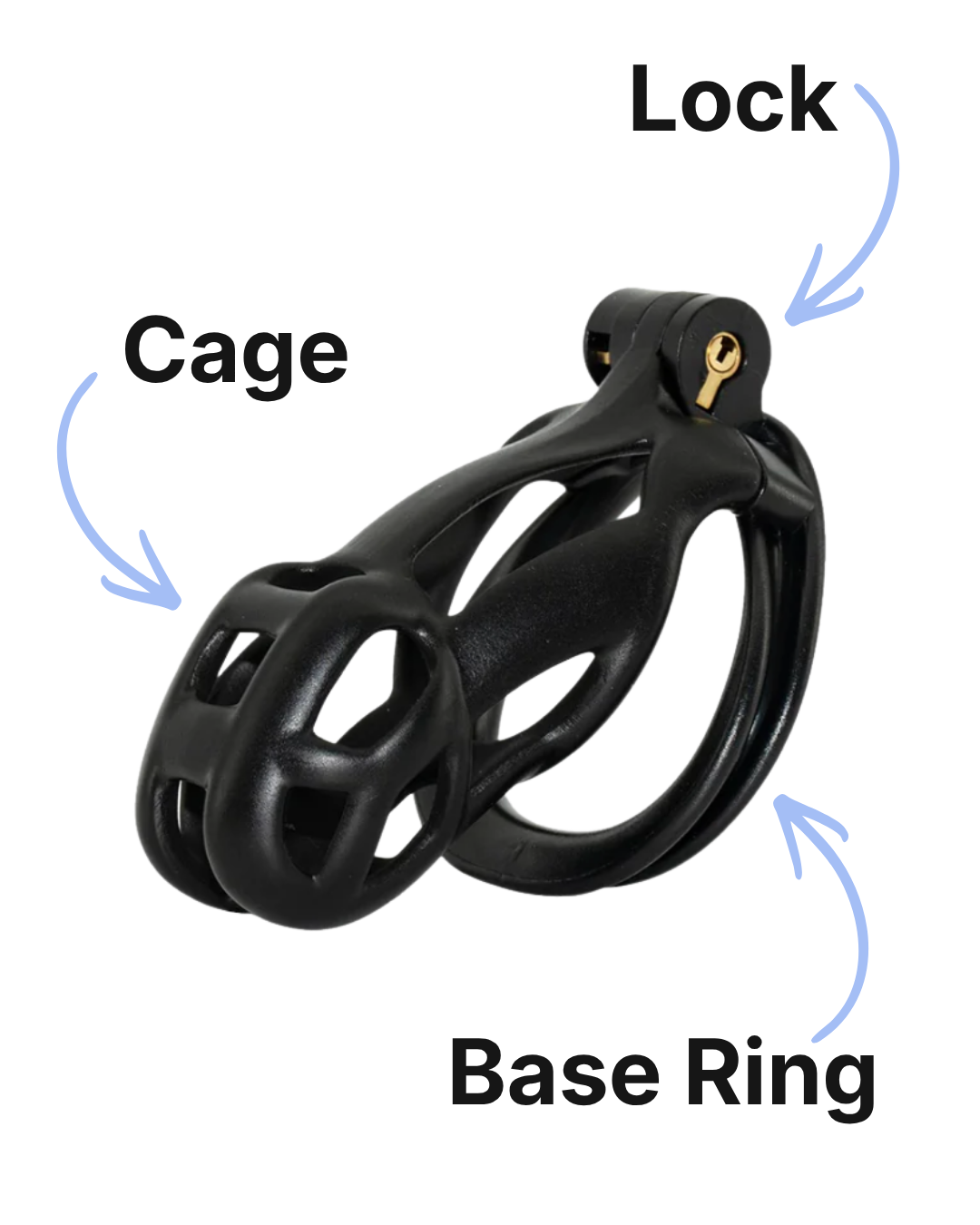
Why Chastity Cages are Prominent in Femdom
Chastity cages hold a unique place in femdom because they make power exchange feel tangible, ongoing, and deeply psychological. Rather than something that only exists during a scene, chastity can extend the dynamic into everyday life. By giving up control over sexual release, the wearer creates a constant, intimate reminder of the agreement they share with their partner.
Chastity also transforms the way desire is experienced. Without a clear “end point,” the focus shifts away from orgasm and toward the build-up and anticipation. This can make even small interactions feel more charged and intentional.
At its core, chastity is built on trust. Choosing to wear a cage (or choosing to hold the key) requires vulnerability on both sides. The wearer is placing control in their partner’s hands, while the keyholder takes on the responsibility of guiding the dynamic with care and attentiveness. When handled thoughtfully, this exchange can deepen emotional intimacy in a way that goes beyond physical play.
There’s no single “right” way to incorporate chastity. Some people enjoy it as part of a short, scene-based experience, while others explore extended wear as part of an ongoing dynamic. Whether it lasts a few hours or becomes part of daily life, the goal is the same: combining physical restraint with emotional connection to create a dynamic that feels intentional and mutually fulfilling.
Beginner’s Guide to Chastity Play
A guide within a guide? Yes, because I’m nothing if not thorough!
Choosing a Cage
If you’re new to chastity, focus on comfort and safety. Lightweight, body-safe resin or silicone chastity cages are usually the best place to start. They’re easier to wear for longer periods and are less likely to irritate. Look for a device that has good ventilation and feels secure but isn’t too tight or painful.
Proper Fit
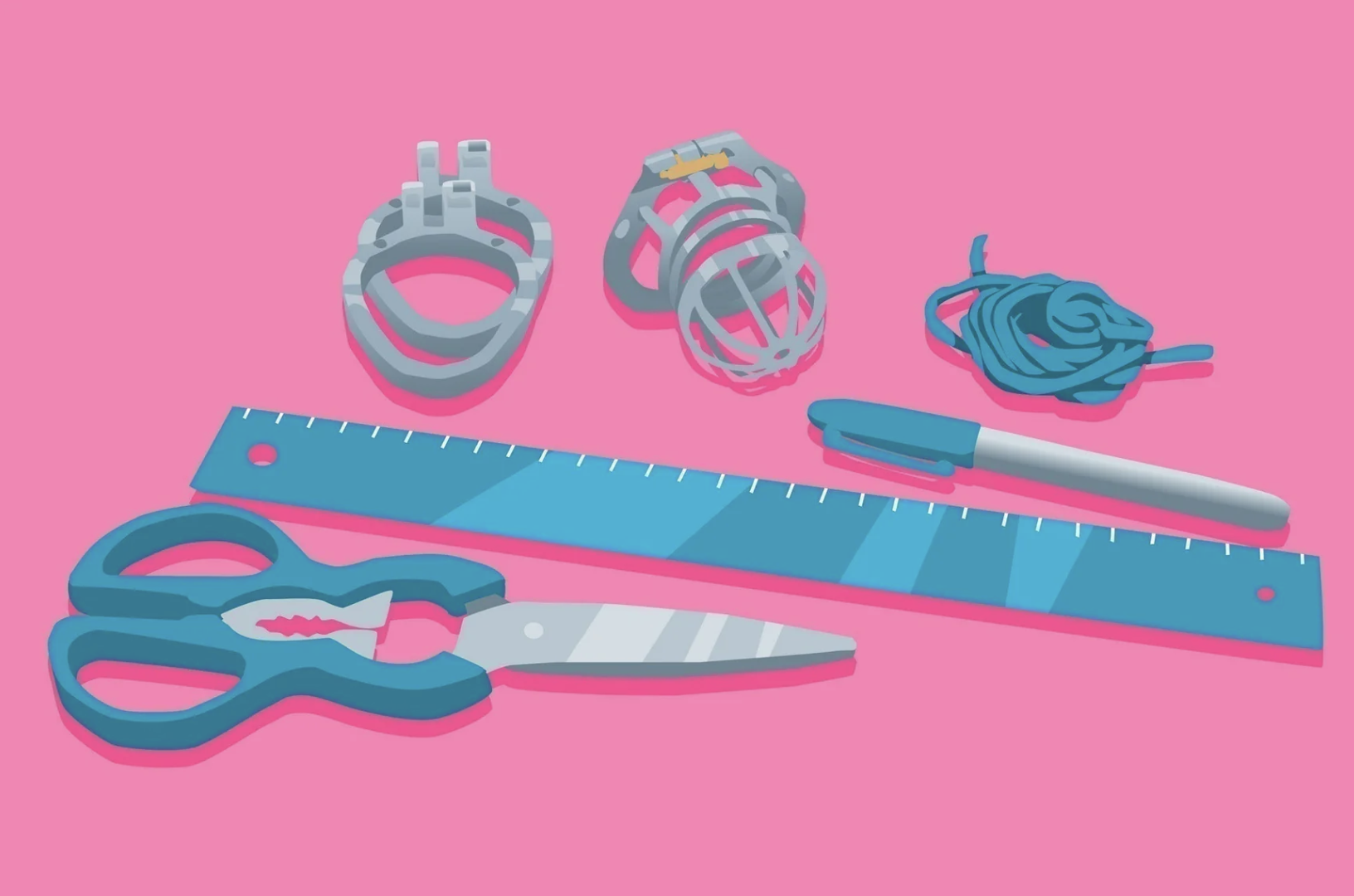
Measure the flaccid length/girth accurately (use the comprehensive sizing guide on Lockd).
A well-fitted cage should:
Feel snug but not tight.
Allow normal circulation
Avoid pinching or sharp pressure points.
Stay securely in place without forcing it.
Hygiene
Keeping clean is very important when wearing a chastity device.
Clean the device every day with warm water and mild soap to prevent irritation or odor. Make sure the device allows for airflow and is easy to clean.
Wearers should regularly check their skin for signs of irritation, redness, or discomfort.
You should completely dry your cage. You may use powder or lube to prevent chafing.
If pain, persistent irritation, or odor occurs, the device should be removed.
Read Chastity Cages Co.’s guide here for additional hygiene tips for chastity cages.
Communication Before Locking
Before locking the device, partners should discuss:
Expectations and boundaries
Duration of wear
Emotional comfort levels
Conditions for removal
Both partners should feel comfortable speaking up about any concerns or discomfort or asking to stop or adjust things at any time, without pressure. Plan regular check-ins to make sure your agreements still feel good.
If you’re new, start slowly. Try wearing the device for 30 to 60 minutes at home, then work up to a few hours or overnight. As comfort and confidence increase, wear time can be extended. But rushing into extended wear too quickly may cause unnecessary discomfort or emotional stress.
Basic Keyholder Guidelines
If you’re the one holding the key, you’ve been given a pretty big responsibility. Your real job is to care for the dynamic and maintain trust, not just to be in charge of the "release." You need to be the one paying attention to their mood and comfort.
Consent and Agreements
Both partners should agree on the following before the lock clicks shut:
Boundaries and limits
Expectations and rules
Planned duration
Conditions for release
Don’t let "release" become a taboo subject. Make it a regular, relaxed part of your week.
Check-in: "How are you feeling in the cage today?"
Adjust: "Is the current rule too easy? Or too frustrating?"
Plan: It gives the wearer something to look forward to when you talk about the "when" and "how" of their eventual release.
The wearer should never feel trapped or unsafe.
Avoid Humiliation Without Negotiation
Some people love a bit of "mean girl" energy or playful teasing, but never dive into heavy humiliation unless you’ve specifically talked about it beforehand. There’s a huge difference between a playful “maybe tomorrow..." and something that actually hurts your partner's feelings or makes them feel small.
Red Flags to Avoid
The dynamic should always add value to your lives. If you notice any of these, it’s time to unlock and have a real-world talk:
Persistent physical pain or discomfort
Signs of emotional distress, anxiety, or resentment
Ignoring agreed boundaries or safe words
Breakdown in communication
Pressure for extended wear without genuine comfort
If any of these warning signs appear, remove the device and talk openly with your partner. Safety and emotional well-being are always more important than keeping up the dynamic.
Want To Explore Further?
If you’re wanting more personalized support working through your own interests, building confidence in a new role, or navigating these dynamics with a partner, you don’t have to figure it out alone.
I offer individual and couples coaching to help you explore kink in a way that feels grounded, intentional, and comfortable.
If you’re ready for guidance or simply want a space to process and ask questions, please reach out!
